How to Choose an Oil of Oregano Supplement: Carvacrol Percentage, Capsules vs Drops, and Dosing
What carvacrol percentage to look for in oil of oregano, softgels vs capsules vs tablets vs drops, cost per dose, dosing and 2 to 4 week cycling.
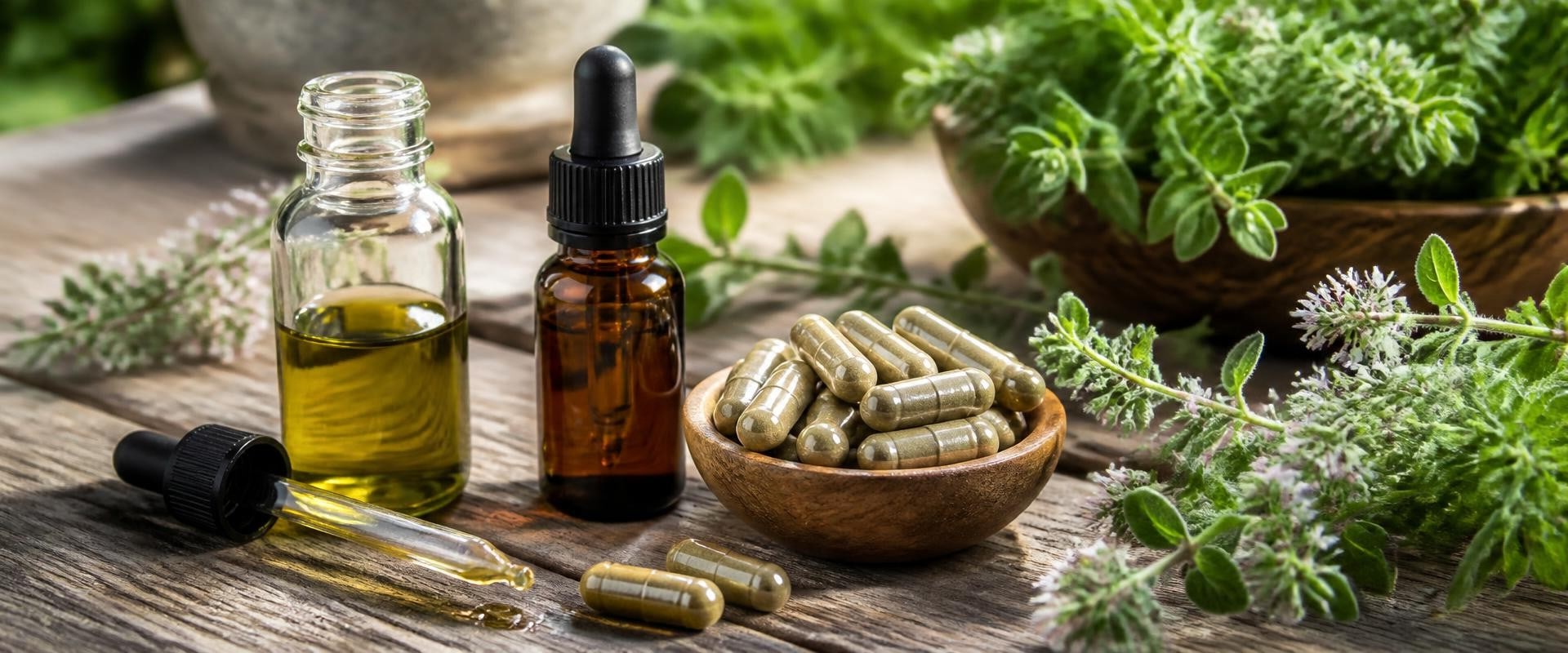
How to Choose an Oil of Oregano Supplement: Carvacrol Percentage, Capsules vs Drops, and Dosing
Two bottles of oil of oregano can sit side by side on the same shelf and deliver wildly different amounts of the compound you are paying for. One states 500 mg of oregano oil and says nothing about potency. The other states 150 mg of oregano essential oil standardized to 70% carvacrol. The second bottle is the better buy, and almost no label gives you enough information to tell.
This guide gives you the numbers: the carvacrol range to look for, how to request and read a certificate of analysis, how each delivery format compares on absorption and burn and cost, a dosing protocol with a cycling schedule, and a label test that separates an ingestible supplement from an aromatherapy oil you should never swallow.
Pure Mountain Botanicals publishes this article and sells one of the products in the comparison table. Competitor details below come from public labels. Where a brand does not disclose potency, the table says so, because that absence is the whole point.
On this page
- The short answer
- What oil of oregano actually is
- Benefits: what the evidence supports
- Carvacrol percentage
- Softgels vs capsules vs tablets vs drops
- Cost per dose
- Dosing protocol and cycling
- Sourcing, organic and carrier oils
- Quality and adulteration checklist
- Comparing your options
- Safety and interactions
- FAQ
- The bottom line
The short answer: what to look for in an oil of oregano supplement
<a id="short-answer"></a>
Buy a product that states the mg of oregano essential oil per serving and the carvacrol percentage of that oil, ideally 50% to 80% or higher, backed by a certificate of analysis rather than marketing copy. Look for wild Mediterranean Origanum vulgare, diluted in a food grade carrier oil, third party tested, made in an NSF GMP certified facility, with no magnesium stearate, titanium dioxide or artificial dyes. Take it with food, 2 to 4 weeks on, then a break.
If you want a fixed dose with no burn and no gelatin, Pure Mountain's wild oregano oil veggie capsules deliver 510 mg per capsule in a cellulose shell. Read the rest of this page first so you can judge that claim the same way you would judge anyone else's.
What oil of oregano actually is (and what it is not)
<a id="what-it-is"></a>
Three different products share the word oregano, and shoppers mix them up constantly.
Culinary dried oregano leaf. The jar in your spice rack. It contains volatile oils, but at a tiny fraction of the concentration in an extract. Capsules of plain powdered leaf are closer to a food than a concentrated supplement.
Steam distilled oregano essential oil. The concentrated volatile fraction of the plant, usually sold in small amber bottles for diffusing or diluted topical use. Undiluted, it is harsh on skin and mucous membranes. Most bottles sold this way are not formulated or labeled for swallowing.
An ingestible oil of oregano supplement. Essential oil diluted in a food grade carrier oil, then put into a capsule or a dropper bottle, and labeled with a Supplement Facts panel and oral directions. This is the category this guide is about.
Species matters as much as format:
- Origanum vulgare is true oregano and the species most supplement oil comes from.
- Origanum majorana is marjoram. Sweeter, far lower in carvacrol, cheaper, and a known substitution in adulterated oils.
- Thymus capitatus is Spanish oregano, botanically a thyme. It can be high in carvacrol but it is not the same plant, and a label that says oregano while the oil is Thymus is telling you less than it should.
"Wild Mediterranean oregano" normally means Origanum vulgare harvested from uncultivated Mediterranean hillsides. Plants grown on dry, rocky, high altitude ground tend to concentrate volatile oils. It is a description of growing conditions, not a certification, so treat it as a question to ask the brand rather than a guarantee.
Oregano oil benefits: what the evidence actually supports
<a id="benefits"></a>
Most of the research on oregano oil is laboratory work on isolated compounds, not clinical trials in people. That distinction is the single most useful thing to hold onto while you read benefit claims.
Antimicrobial and antifungal activity (mostly in vitro). Carvacrol and thymol disrupt microbial cell membranes in petri dish studies and in some animal models. These results explain why oregano oil is used as a food preservative and why it has a traditional reputation. They do not establish that a capsule produces the same effect inside a human body, and oregano oil is not a substitute for prescribed medicine.
Antioxidant activity. Oregano oil scores high on laboratory antioxidant assays, driven by its phenolic content. Human outcome data is thin.
Traditional use for seasonal immune support. Long history of use across Mediterranean herbal traditions. This is a structure and function framing, and it is how most supplements in this category are legitimately positioned.
Digestive and gut support. Some small human studies have looked at oregano oil preparations for digestive complaints. Results are preliminary and sample sizes are small.
Anti inflammatory signaling. Carvacrol affects inflammatory signaling pathways in cell and animal models.
What the research does not show: that oregano oil treats, cures or prevents any disease; that it replaces an antibiotic or antifungal; or that any particular dose produces a specific clinical outcome in humans. Mainstream health references including WebMD name carvacrol as the key active compound. None of them then tell you how much carvacrol is in the bottle you are about to buy, which is where the rest of this guide starts.
Carvacrol percentage: the number almost no label tells you
<a id="carvacrol"></a>
Look for an oregano essential oil that tests at roughly 50% to 80% or more carvacrol, confirmed on a certificate of analysis or GC/MS report rather than in marketing copy. Then check the mg of oregano essential oil per serving. Potency and quantity together tell you how much active you get. Either number alone tells you almost nothing.
Carvacrol and thymol are phenolic compounds and the dominant volatile constituents of oregano oil. They are responsible for the antimicrobial and antioxidant activity seen in lab studies, and they are also responsible for the burn and the medicinal taste. High carvacrol oil tastes aggressive. That is the compound doing what it does.
Carvacrol content varies with species, altitude, harvest timing, weather and distillation method. A well made wild Mediterranean oil commonly lands in the 60% to 80% range. Lower grade material, oil distilled from cultivated plants at the wrong time, or oil cut with a cheaper botanical can test far below that.
How to get a COA and what to read on it
If the percentage is not printed on the label or the product page, email customer service with a short, specific request:
"Please send the certificate of analysis or GC/MS report for the current lot of your oregano oil product, including carvacrol and thymol percentages. My lot number is [lot]."
A brand that tests every lot can send this within a day or two. A brand that cannot produce one is telling you something.
On the report, look for:
- Constituent list with percentages adding up near 100%
- % carvacrol and % thymol, the two phenolics that matter most
- p-cymene and gamma-terpinene, precursors to carvacrol; unusually high p-cymene with low carvacrol can indicate old, oxidized or poorly distilled oil
- Lot or batch number that matches your bottle
- Testing lab name and whether it is independent of the manufacturer
- Test date, which should be reasonably close to the manufacturing date
Why most brands skip it: GC/MS testing costs money per lot, carvacrol varies naturally between harvests so a printed number can go out of date, and "proprietary blend" language is easier to defend in marketing than a number a customer can check. None of those are good reasons from the buyer's side.
How to calculate the carvacrol you are actually getting
The math is one line:
mg of oregano essential oil per serving x carvacrol % = mg carvacrol per serving
The trap is that a capsule stating a large mg number often counts the carrier oil, or powdered leaf, or both. Here are two illustrative products to show how the bigger number can lose.
| Product A | Product B | |
|---|---|---|
| Label headline | 650 mg oregano blend | 200 mg oregano oil |
| Actual oregano essential oil per serving | 100 mg (rest is olive oil + leaf powder) | 200 mg |
| Carvacrol % (per COA) | Not disclosed, assume 40% | 70% |
| Carvacrol per serving | 40 mg | 140 mg |
Product A looks three times stronger on the front of the bottle and delivers less than a third of the active. These figures are constructed to show the method, not quotes from real products. Run the same math on any bottle you are considering, including ours.
Softgels vs vegetarian capsules vs tablets vs liquid drops
<a id="formats"></a>
| Format | Typical oregano oil per serving | Absorption / onset | Taste & burn | Dosing precision | Vegan / kosher | Typical cost per dose | Best for |
|---|---|---|---|---|---|---|---|
| Gelatin softgel | Oil pre diluted in carrier, often 100 to 200 mg essential oil | Good; shell dissolves in stomach | None if it stays down; possible oregano burps | Fixed, high | Usually bovine or fish gelatin, so no | Often the cheapest per dose | Lowest upfront price, if gelatin is fine with you |
| Vegetarian capsule (HPMC/cellulose) | Oil or oil plus leaf, commonly 400 to 600 mg total | Comparable to softgel | None in mouth | Fixed, high | Yes, when certified | Mid range | Vegan and kosher buyers wanting a no burn fixed dose |
| Tablet | Usually compressed leaf powder; little to no volatile oil | Slowest; binders and coatings must break down | Mild | Fixed | Varies; coatings may contain titanium dioxide | Often cheapest per count, weakest per mg active | Little advantage for oregano oil specifically |
| Liquid tincture / drops | Dose set by drop count | Fastest contact with mucous membranes | Strong burn, must be diluted | Flexible but hard to repeat exactly | Usually yes | Varies widely with dilution | Dose titration, children's dosing under practitioner guidance, people who cannot swallow capsules |
When each one actually wins. Softgels win on price if gelatin is not a dealbreaker. Vegetarian capsules win for vegan and kosher buyers and for anyone who hates the taste, because the oil never touches your mouth. Liquid drops win when you want to start at a very low dose and work up, or adjust day to day. Tablets rarely win for oregano oil, because the volatile compounds you want are hard to hold in a compressed, coated tablet, and many tablets are powdered leaf rather than oil.
If you searched for oregano tablets or oregano pills, you probably want capsules. In normal speech "pills" covers both. On a label, a tablet is compressed powder and a capsule is a shell holding oil or powder. For oregano oil, the capsule is the form that carries the active.
Our own product is a vegetarian capsule for exactly those reasons: fixed dose, no burn, no gelatin. See the full label on the wild oregano capsule page
Cost per dose: how to compare oregano oil supplements on price
<a id="cost"></a>
Two formulas do all the work.
- Bottle price ÷ servings per bottle = cost per serving
- Cost per serving ÷ mg carvacrol per serving = cost per mg of active
The second number is the only one that lets you compare across formats and brands fairly. Here is the method applied to four illustrative products. The prices and potencies below are constructed examples to demonstrate the math, not quotes, and retail prices change constantly.
| Example product | Price | Servings | Cost / serving | mg carvacrol / serving (est.) | Cost per mg carvacrol |
|---|---|---|---|---|---|
| Gelatin softgel, 150 mg oil, 70% carvacrol | $14.00 | 90 | $0.16 | 105 mg | $0.0015 |
| Veggie capsule, 200 mg oil, 70% carvacrol | $22.00 | 60 | $0.37 | 140 mg | $0.0026 |
| Compressed leaf tablet, 500 mg leaf powder | $9.00 | 150 | $0.06 | Low, undisclosed | Cannot calculate |
| Liquid drops, 4 drops delivering ~50 mg oil, 70% | $25.00 | 240 doses | $0.10 | 35 mg | $0.0029 |
The tablet row is the important one. It looks like the best deal per serving and you cannot calculate its cost per mg of active at all, because the label does not give you a number to divide by. That is not a bargain, it is an unknown.
Value traps to watch for:
- A 150 count bottle of low oil tablets at a low price per count, with no volatile oil figure anywhere.
- A "liquid oregano oil" that is mostly olive oil with a small percentage of essential oil, priced as if it were neat oil.
- Any product that will not disclose mg of essential oil per serving. You cannot do the math, so you cannot compare it.
- Enormous serving sizes. Four capsules per serving makes a 120 count bottle a 30 day supply.
Subscriptions. Subscribe and Save on puremountain.com takes 10% off, which moves cost per serving down by the same 10%. Orders over $49 ship free, which matters more than people expect when you are comparing a $20 bottle across two sites. Run both numbers with shipping included before you decide.
Dosing protocol: how much oil of oregano to take, and when
<a id="dosing"></a>
These are general ranges based on common label directions. Anyone with a medical condition, anyone pregnant or nursing, anyone on medication, and anyone dosing a child should have a healthcare provider set the dose.
Capsules. Most oregano oil capsules are labeled at one capsule once or twice daily with food. Pure Mountain's capsule is 510 mg per capsule, one capsule as a serving, which gives you a concrete anchor to compare other labels against. Start at one capsule daily and only move up if you tolerate it well.
Liquid drops. Typical directions land in the range of 2 to 5 drops, one to three times daily, always diluted. Dilute in a teaspoon of olive or coconut oil, or in a glass of water or juice. Never put undiluted oregano essential oil in your mouth. Start at the low end, because the burn is real and tolerance varies.
By goal:
- Short term seasonal immune support. A higher end of label dosing for a defined stretch of 7 to 14 days, with food, then stop. Pair it with the rest of a seasonal routine rather than relying on one bottle. Our immune support range and prebuilt bundles are built for that window.
- Ongoing digestive and gut support. Lower, steadier dosing, usually once daily with the largest meal, run in cycles rather than continuously.
Always with food. An empty stomach dose of a concentrated phenolic is the fastest route to heartburn, nausea and reflux. Taking it with a meal containing some fat buffers the irritation and slows release. This single change fixes most of the stomach upset people report.
The 2 to 4 week on, 1 to 2 week off cycle
The common guidance is to run oregano oil for 2 to 4 weeks and then take a break of 1 to 2 weeks. Three reasons:
- GI tolerance. Continuous dosing of a strong phenolic is more likely to cause irritation the longer it runs.
- Gut flora. Carvacrol does not distinguish between organisms in a petri dish. A break gives beneficial flora room.
- Phenolic load. Oregano oil is a potent concentrate, not a daily multivitamin. Intermittent use respects that.
A simple schedule:
| Week | Plan |
|---|---|
| 1 | 1 capsule daily with your largest meal |
| 2 | 1 capsule twice daily with meals, if week 1 was comfortable |
| 3 | Same as week 2 |
| 4 | Back to 1 capsule daily, then stop at the end of the week |
| 5 to 6 | Off. Resume after if you want another cycle. |
Should you take oregano oil before bed?
Most people do better taking it with the largest meal of the day instead. A late dose on a near empty stomach, followed by lying down, is the setup for reflux and for burping the taste back up for an hour. If night is the only time you will remember it, take it with food, drink a full glass of water, and stay upright for at least 30 minutes.
Sourcing: wild Mediterranean oregano, organic certification, and carrier oils
<a id="sourcing"></a>
Species and origin. Ask the brand two questions: which species, and which country. A straight answer is Origanum vulgare, Mediterranean. A vague answer, "oregano extract" with no species and no plant part, is a reason to move on.
Wild harvested. Not a regulated certification in the United States. Any brand can print it. It describes plants collected from uncultivated land, which in oregano's case often means dry, high altitude, nutrient poor ground, conditions associated with higher volatile oil production. Useful as a signal, worthless as a guarantee. The COA is the proof.
USDA Organic. A regulated certification covering the growing and processing inputs: no prohibited pesticides, no prohibited synthetic processing aids, with inspections and records. It does not certify carvacrol content. An organic oregano oil can test lower in carvacrol than a conventional one. Buy organic because you care about inputs, then check potency separately. These are two different questions and brands blur them constantly.
Carrier oils. Any ingestible oregano oil should be diluted in food grade carrier oil.
| Carrier | Taste | Stability | Effect on carvacrol |
|---|---|---|---|
| Extra virgin olive oil | Mild, traditional, slightly peppery | Good; natural antioxidants | None. Dilution changes concentration per mL, not the carvacrol % of the oregano oil itself |
| Coconut / MCT | Neutral, lighter mouthfeel | Very stable, long shelf life | None |
The carrier affects taste, mouthfeel and shelf life. It does not change the carvacrol percentage of the underlying essential oil. What it does change is how much essential oil is in each drop, which is why a dilution ratio or a mg per serving figure is non negotiable on a liquid product.
Harvest and distillation. Carvacrol peaks around flowering, and altitude and dry conditions push it higher. Steam distillation temperature and run time affect the final constituent profile. You will not get all this detail from most brands. You can get the COA, which reflects the outcome of all of it.
Quality and adulteration checklist: how to avoid a bad bottle
<a id="quality"></a>
Run a bottle against this before buying:
- Species and country of origin stated on the label or product page
- Carvacrol % stated, or a COA/GC-MS available on request
- mg of oregano essential oil per serving, not just a blend weight
- Third party testing for identity, potency, heavy metals and microbials
- Manufactured in a US FDA registered, NSF GMP certified facility
- Kosher certification (KOF-K) and vegan status, if those matter to you
- Capsule material disclosed: HPMC/cellulose veggie cap or gelatin softgel
- No magnesium stearate, titanium dioxide, artificial dyes or unnecessary binders
- Dark glass or opaque bottle, since light degrades volatile oils
- Lot number and expiration date printed on the bottle
Red flags:
- "Proprietary blend" with no mg breakdown per ingredient
- "Oregano extract" with no species and no plant part named
- Price far below everything else in the category
- Marjoram listed in the ingredients of a product sold as oregano oil, or a suspiciously sweet, mild smelling oil. Marjoram is cheaper and much lower in carvacrol, and substitution is a known practice. Smell and taste are not proof. GC/MS is the only reliable check, which is another reason the COA matters.
- No response when you ask for test documents
Our testing process, including which tests run on each lot, is written out on the quality control and testing page. Hold other brands to the same standard.
How to tell an ingestible supplement from an aromatherapy essential oil
This one is simple and it matters, because swallowing undiluted essential oil can burn the mouth, throat and stomach lining.
| Ingestible supplement | Aromatherapy / topical essential oil |
|---|---|
| Supplement Facts panel | Ingredients line only, no Supplement Facts panel |
| Stated serving size | No serving size |
| Carrier oil listed in ingredients | Usually 100% pure essential oil, undiluted |
| Directions for oral use | "For external use only," "dilute before topical use," or "not for internal consumption" |
If there is no Supplement Facts panel, do not swallow it. Our essential oils collection is the right place for diffuser and diluted topical use. The capsules are the product made for taking by mouth. They are not interchangeable.
Comparing your options: types of oil of oregano supplements
<a id="compare"></a>
This is organized by buyer type rather than a ranking, because the right answer depends on your constraints. Pure Mountain Botanicals publishes this article and sells the product in the first row. Competitor columns reflect what brands publicly disclose; "not disclosed" means the brand does not publish the figure, which is itself the point.
| Option | mg per serving | Carvacrol % disclosed? | Vegan | Kosher | Excipients | Capsule material |
|---|---|---|---|---|---|---|
| Pure Mountain Wild Oregano Oil Capsules, 60 veggie caps | 510 mg per capsule | [VERIFY: current COA carvacrol 70% for the active lot] | Yes | Yes, KOF-K | No magnesium stearate, titanium dioxide or artificial dyes | HPMC veggie capsule |
| Typical gelatin softgel (mass market) | Varies by brand | Usually not disclosed | No | No | Gelatin, glycerin; varies | Bovine or fish gelatin |
| Liquid phytocap style capsule (e.g. Gaia Herbs oil of oregano) | Per brand label | Not disclosed on product page | Per brand label | Per brand label | Per brand label | Plant based capsule |
| Liquid tincture / drops | Set by drop count and dilution ratio | Varies; rarely disclosed | Usually yes | Varies | Carrier oil | None |
| Compressed oregano tablet | Usually leaf powder, oil content unstated | No | Varies | Varies | Binders, coatings, sometimes titanium dioxide | Not applicable |
Best for vegan and kosher buyers who want a fixed, no burn dose: a certified vegetarian capsule. Pure Mountain's is 510 mg per veggie cap, made in a US FDA registered, NSF GMP certified facility, KOF-K kosher certified, vegan, gluten free, non GMO, with no magnesium stearate, titanium dioxide or artificial dyes.
Best for dose flexibility: liquid drops, if you are willing to dilute every dose and tolerate the burn.
Best for lowest upfront price: gelatin softgels, with the trade off that gelatin rules them out for vegan and most kosher buyers.
Be cautious with: compressed tablets. For oregano oil specifically, they are the weakest carrier of the actives and most likely to include coatings you were trying to avoid.
Safety, side effects and interactions
<a id="safety"></a>
- GI irritation, heartburn, nausea. The most common complaints. Taking the dose with a full meal resolves it for most people. If it does not, lower the dose or stop.
- Mouth and throat burn. Caused by undiluted liquid oil. Always dilute drops in carrier oil, water or juice.
- Lamiaceae allergy. If you react to mint family plants (oregano, thyme, basil, mint, sage, marjoram, lavender), avoid oregano oil.
- Pregnancy and nursing. Avoid. Concentrated oregano oil is not established as safe in pregnancy or while breastfeeding.
- Blood thinners. Possible additive effect on bleeding. Talk to your prescriber before combining.
- Diabetes medication. Oregano oil may lower blood sugar, which can stack with medication. Monitor and get medical advice.
- Iron absorption. Phenolic compounds can reduce non heme iron absorption. If you supplement iron, separate the doses by a couple of hours.
- Surgery. Stop at least two weeks before a scheduled procedure, consistent with standard advice for supplements that may affect bleeding or blood sugar.
Talk to a healthcare provider before starting, and especially before any long term daily use or use alongside prescription medication.
Frequently asked questions
<a id="faq"></a>
See the structured FAQ below. The same answers are marked up with FAQPage schema.
The bottom line
<a id="bottom-line"></a>
Five checks, in order:
- Does the label state mg of oregano oil per serving, not just a blend weight?
- Does it state a carvacrol percentage, or will the brand send a COA on request?
- Is the species Origanum vulgare with a named country of origin?
- Is it third party tested, made in an NSF GMP certified facility, and free of magnesium stearate, titanium dioxide and dyes?
- Does the capsule material match your requirements, veggie cap versus gelatin?
If a bottle fails two or more of those, put it down.
For a fixed 510 mg veggie capsule dose that is kosher certified, vegan, gluten free and non GMO, see the wild oregano oil capsules. If you are building a seasonal routine, the immune support collection, and Subscribe and Save takes another 10% off each shipment.
These statements have not been evaluated by the Food and Drug Administration. This product is not intended to diagnose, treat, cure or prevent any disease.
Frequently asked questions
Can you take oregano oil every day?
Many people take oregano oil daily with food for a defined stretch, commonly 2 to 4 weeks, then take a 1 to 2 week break. Daily use without a break is not the standard recommendation, mainly because of GI irritation and the effect of a strong phenolic on gut flora. Take it with a meal, start at the lowest label dose, and check with a provider if you are on medication.
Is long-term daily use of oregano oil safe?
There is not good human safety data on continuous long term daily use of concentrated oregano oil. Traditional and common practice is intermittent use in cycles. If you want to take it for months, do it in cycles with breaks, keep to label doses, take it with food, and discuss it with a healthcare provider, especially if you take blood thinners or diabetes medication.
Can you take oregano oil before bed?
You can, but most people tolerate it better with the largest meal of the day. A late dose on a near empty stomach followed by lying down increases the chance of reflux and oregano burps. If bedtime is the only time you will remember, take it with food and a full glass of water, and stay upright for at least 30 minutes.
Does oregano oil detox the body?
No. Your liver and kidneys handle detoxification, and no supplement takes over that job. Oregano oil is a concentrated source of carvacrol and thymol, phenolic compounds with antioxidant activity in laboratory testing, and it is traditionally used for immune and digestive support. Those are the honest claims. Detox framing is marketing language, not a described mechanism.
What carvacrol percentage should I look for?
Look for oregano essential oil testing in the range of 50% to 80% or higher carvacrol, verified on a certificate of analysis or GC/MS report rather than claimed in marketing copy. Then check mg of oregano essential oil per serving, because potency without quantity tells you nothing. Multiply the two to get mg of carvacrol per serving.
How many mg of oregano oil should I take per day?
Follow the label. Most oregano oil capsules are labeled at one capsule once or twice daily with food; Pure Mountain's capsule is 510 mg per capsule. Liquid directions typically fall around 2 to 5 diluted drops, one to three times daily. Start at the low end. Anyone pregnant, nursing, medicated or managing a condition should have a provider set the dose.
Should I take oregano oil with food or on an empty stomach?
With food. An empty stomach dose of a concentrated phenolic is the main cause of the heartburn, nausea and reflux people report. Taking it with a meal that contains some fat buffers the irritation. This one change fixes most tolerance problems without lowering the dose.
Can I swallow oregano essential oil straight?
No. Undiluted essential oil can burn the mouth, throat and stomach lining. Ingestible products are diluted in a food grade carrier oil and carry a Supplement Facts panel, a serving size and oral directions. A bottle with only an ingredients line, no serving size, or wording like for external use only is not meant to be swallowed.
Does USDA Organic mean higher carvacrol content?
No. USDA Organic certifies growing and processing inputs, including prohibited pesticides and synthetic processing aids, with inspections and records. It says nothing about carvacrol percentage. An organic oil can test lower in carvacrol than a conventional one. Buy organic for the inputs, then verify potency separately on a certificate of analysis.
How can I tell if an oregano oil is adulterated with marjoram?
You cannot tell reliably by smell or taste, though marjoram oil is noticeably sweeter and milder. Marjoram is cheaper and much lower in carvacrol, which makes it a known substitution. GC/MS analysis is the only dependable check. Ask the brand for the certificate of analysis for your lot and look at the carvacrol and thymol percentages.
Are oregano tablets as effective as oregano oil capsules?
Usually not, for oregano oil specifically. Most tablets are compressed powdered oregano leaf, which contains far less volatile oil than a concentrated extract, and they often include binders and coatings. Capsules hold the oil itself. If the label does not state mg of oregano essential oil, you cannot calculate what you are getting.
Where can I buy oregano oil capsules that are vegan and kosher?
Pure Mountain Botanicals sells wild oregano oil capsules in HPMC veggie capsules, 510 mg per capsule, KOF-K kosher certified, vegan, gluten free and non GMO, made in a US FDA registered and NSF GMP certified facility, with no magnesium stearate, titanium dioxide or artificial dyes. They are available at puremountain.com with free shipping over $49.